
Boost your energy, immune health, and bone strength with this superhero vitamin.
What is Vitamin D?
Vitamin D is more than just a vitamin — it’s a fat-soluble hormone-like compound that your body produces when your skin is exposed to sunlight. Known as the “sunshine vitamin,” it plays a central role in how we feel, move, and protect ourselves. It supports the absorption of calcium and phosphorus for strong bones, enhances immune system readiness, and has been linked to improved mood and reduced risk of depression. People who optimize their vitamin D levels often report better energy, fewer colds and flus, less joint pain, and even enhanced athletic performance. In short, vitamin D can make a profound impact on your daily vitality and long-term health — it truly is one of the body’s unsung heroes.
There are two main forms:
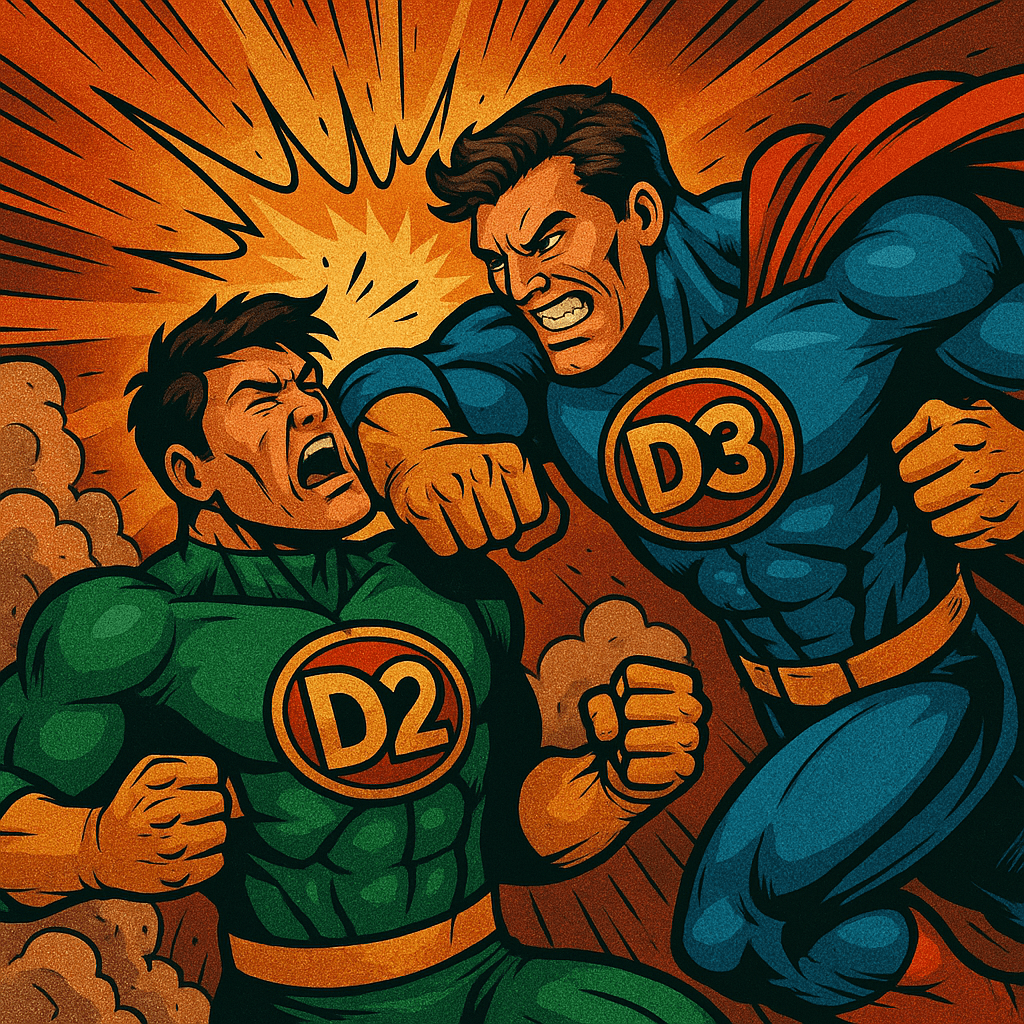
- Vitamin D2: Found in plant sources like UV-exposed mushrooms and fortified foods such as breakfast cereals, plant-based milks, and orange juice. While D2 can help raise vitamin D levels, it is less potent and has a shorter duration of action than vitamin D3. This is why D3 is typically preferred in supplements. That said, for vegans or individuals avoiding animal products, D2 can still contribute meaningfully to daily vitamin D intake — just not as effectively as D3.
- Vitamin D3: The form your skin makes from sunlight and found in fatty animal products such as salmon, sardines, egg yolks, liver, and fortified dairy products. It is significantly more effective than D2 at raising and maintaining optimal vitamin D levels in the blood. This is because D3 is more bioavailable and remains in the body longer. In real life, getting enough D3 naturally can be a challenge if you’re not regularly eating fatty fish or spending time in the sun, which is why D3 supplementation has become the preferred strategy for improving vitamin D status — especially in people who are indoors often, live in cities, or cover up their skin for cultural or skin-care reasons.
1. Most People Are Vitamin D Deficient ❌
Globally, over 1 billion people are vitamin D deficient. Even in sunny countries like South Africa, indoor lifestyles, sunscreen use, and air pollution reduce sun exposure.
30–60% of South Africans are estimated to have insufficient vitamin D levels.
You may be at risk if you:
- Spend most of your time indoors
- Have darker skin
- Are over age 50
- Rarely eat oily fish, eggs, or fortified foods
- Use sunscreen every day (it blocks UVB rays!)
2. Signs You’re Deficient in Vitamin D ⚡
- Low energy or constant fatigue
- Muscle weakness or leg cramps
- Bone pain or stiffness
- Frequent infections or colds
- Depression or low mood
- Hair loss or slow wound healing
Want to check if you might be deficient?
3. The Power Combo: Vitamin D + K2 + Magnesium 🔊
Vitamin D works best when combined with other key nutrients:
| Nutrient | Why It Matters with Vitamin D | Best Sources |
|---|---|---|
| Vitamin K2 | Directs calcium to bones, not arteries | Natto, hard cheese, MK-7 supplements |
| Magnesium | Activates vitamin D in the body | Leafy greens, pumpkin seeds |
| Calcium | Works with D to build strong bones | Dairy, fortified foods |
| Zinc | Enhances immune effects of vitamin D | Meat, nuts, whole grains |
| Healthy fats | Help your body absorb vitamin D (it's fat-soluble!) | Avocados, olive oil, salmon |
4. How Much Vitamin D Do You Need Daily?
| Group | Recommended Daily Intake | Upper Limit |
| Infants (0–12 months) | 400 IU | 1000 IU |
| Children (1–18 years) | 600–1000 IU | 2000–3000 IU |
| Adults (19–70 years) | 800–1000 IU | 4000 IU |
| Seniors (>70 years) | 1000 IU | 4000 IU |
| Pregnant/Breastfeeding Women | 800–1000 IU | 4000 IU |
For optimal levels, aim for 30–50 ng/mL of 25(OH)D on a blood test.
5. Sunlight is the Best Source… But It’s Not Always Enough ☀
- Your skin makes vitamin D from UVB sunlight.
- 10–20 minutes of midday sun on arms/legs is usually enough (without sunscreen).
- Sunscreen can reduce vitamin D synthesis by 90% or more.
That’s why supplementation may be necessary even in sunny climates.
6. Best Foods Rich in Vitamin D 🍾
| Food Source | Approx. Vitamin D per serving |
| Salmon (100g) | 600–1000 IU |
| Cod Liver Oil (1 tsp) | 400–1000 IU |
| Egg yolk (1 yolk) | ~40 IU |
| Fortified milk | ~100 IU per cup |
| UV-exposed mushrooms | ~400 IU per 100g |
7. Supplementing: A Smart Move for Most Adults 💊
If you're not consistently getting sunlight or vitamin D-rich foods, supplements are a safe and effective way to meet your needs.
- Best type: Vitamin D3 with K2
- Dose: 1000–2000 IU/day for most adults
- Tip: Take with a fatty meal for maximum absorption.
When paired with Vitamin K2, especially in the MK-7 form, vitamin D becomes even more powerful. Vitamin D enhances calcium absorption in the gut, but it’s K2 that tells your body where to put that calcium. Without enough K2, calcium may deposit in soft tissues like arteries instead of bones. This combination helps prevent arterial calcification and improves bone mineral density, reducing the risk of osteoporosis and heart disease.
For individuals, this means:
- Stronger bones and teeth
- Better cardiovascular health
- Reduced risk of fractures
- Improved long-term mobility and independence in aging
Together, vitamin D and K2 create a dynamic synergy that not only strengthens the body but also ensures safety in calcium metabolism. It's a perfect example of how one nutrient can amplify another for greater overall health.
Final Thoughts: Be Your Own Health Superhero 🤩
Vitamin D is like your body's internal Iron Man suit — it powers your bones, boosts your immunity, and helps you fight fatigue. But without it, your health could slowly wear down.
So take charge:
- Get a little safe sun exposure
- Eat vitamin D-rich foods
- Supplement smartly
And always pair it with magnesium and vitamin K2 for optimal benefit.
Disclaimer: This blog is for educational purposes only. Always consult with a healthcare professional before beginning new supplements.
📤 Share this article:


